





Responding to routine requests. Searching for documents. Updating fields across multiple systems. Scheduling follow-ups after meetings.
These activities seem insignificant individually, yet together they consume a large portion of the workday. Employees often describe them as the “invisible work” that keeps organizations running but rarely appears in job descriptions.
Research from workplace productivity studies suggests that employees spend up to 23 hours each week on repetitive coordination tasks and administrative micro-tasks. While each task may take only a few minutes, the cumulative effect is substantial.
For companies trying to improve productivity, understanding the role of micro-tasks is essential.
Understanding the Fundamentals
Micro-tasks exist because modern work is distributed across many systems. A single project might involve a project management platform, communication tools, document repositories, analytics dashboards, and internal databases. Each system requires updates and coordination.
Consider what happens after a simple meeting. Someone needs to summarize the discussion, update project tasks, notify team members, attach documents, and ensure deadlines are recorded correctly. These steps rarely require complex thinking, but they must be performed accurately.
In large organizations, these micro-tasks multiply rapidly. The average knowledge worker now interacts with more than 10 workplace applications daily, and in many companies the total number of tools exceeds 100.
When information moves between these systems manually, employees become the connectors between software platforms. Instead of focusing on problem solving or creativity, they spend significant time coordinating tools.
Key Strategies for Success
Organizations are beginning to address this challenge by introducing automation at the micro-task level. Instead of asking employees to manage every small operational step, AI systems can perform these actions automatically.
Several strategies are proving particularly effective.
Workflow Automation
Routine processes such as generating meeting summaries, scheduling reminders, and updating project records can be automated so that employees do not need to perform them manually.
System Coordination
AI platforms can trigger actions across multiple tools simultaneously, ensuring that information remains synchronized between systems.
Context Awareness
Advanced AI systems analyze patterns in workplace activity and anticipate common tasks, allowing them to assist employees before coordination becomes necessary.
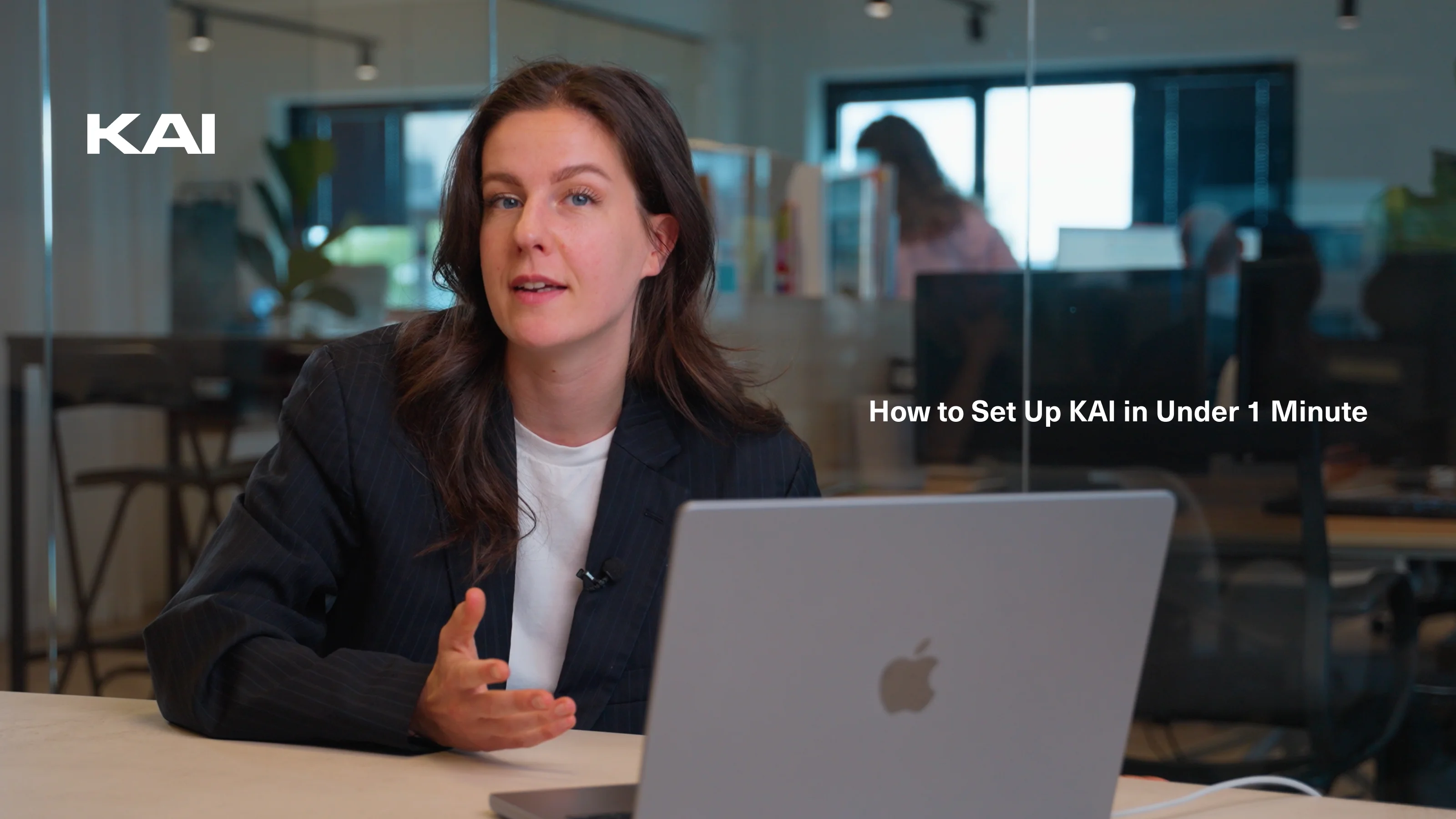
This approach forms the foundation of KAI, the AI workspace developed by AI Replies. KAI operates as a unified layer between employees and the many systems they rely on. By connecting tools and automating routine actions, the platform removes much of the invisible work that normally slows teams down.
Real-World Applications
Imagine a marketing team preparing a weekly performance review. Traditionally, someone must gather data from analytics platforms, retrieve campaign reports, summarize recent discussions, and compile the information into a presentation.
With an AI workspace like KAI, these steps can be coordinated automatically. The system collects relevant data from connected platforms, generates summaries, and prepares structured updates for the team.
Similarly, when a new employee joins the company, onboarding often involves multiple administrative steps: account creation, document distribution, meeting scheduling, and workflow assignments. AI can orchestrate these actions across systems without requiring manual coordination.
The result is not simply faster execution, it is a smoother working environment where employees spend less time managing tools and more time applying their expertise.
Common Challenges and Solutions
While automation significantly reduces micro-task overhead, organizations must approach implementation thoughtfully.
Challenge 1: Over-automation
Some processes require human judgment. Effective AI systems assist employees rather than replacing decision-making.
Challenge 2: Tool Integration
Companies often operate complex software ecosystems. AI platforms must integrate with existing tools instead of forcing organizations to replace them.
Challenge 3: Organizational Adoption
Employees may initially rely on familiar workflows. Gradual introduction of AI assistance allows teams to build trust in the system.
A New Standard for Productive Work
The modern workplace produces enormous amounts of coordination work. While these micro-tasks are necessary, they do not need to be performed manually.
AI workspaces offer a new model in which routine actions happen automatically while employees focus on strategy, creativity, and collaboration.
By reducing the friction created by small operational steps, platforms like KAI allow organizations to reclaim time that would otherwise disappear into administrative coordination.
When micro-tasks fade into the background, teams gain something increasingly rare in digital workplaces: the ability to focus.